From Emotion to Evidence: Why Rational Buying Is Reshaping Indian Real Estate.

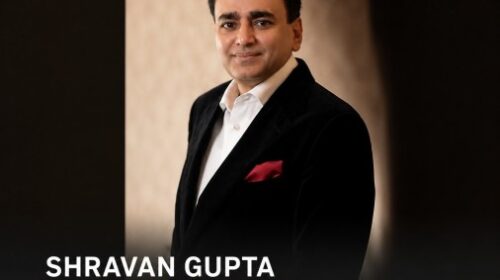
By Shravan Gupta.
For decades, Indian real estate was driven by emotion, with homeownership seen as a cultural milestone built on the belief of inevitable value growth. However, Shravan Gupta, MGF Group, notes a structural shift toward evidence-driven buying. Today’s analytical homebuyer evaluates property based on data rather than instinct, marking a transition toward a more mature and evaluative market.
Real estate appreciation.
One of the most consequential shifts in recent years has been the erosion of the long-standing belief that real estate prices will inevitably rise. As Shravan Gupta, MGF Group, notes, several micro-markets across India have witnessed phases of stagnation and uneven growth, instilling a greater sense of realism in buyer expectations.
While subtle, this change is deeply transformative. It signals a move away from assumption-driven decisions toward a more evaluative approach—where infrastructure pipelines, demand fundamentals, and location dynamics increasingly determine both value and intent.
Transparency as a Market Equaliser.
A central force behind this transformation is the growing transparency within the market. Stronger regulatory frameworks, combined with unprecedented access to information, have empowered buyers with clarity and confidence. And this trend has fundamentally reshaped the power dynamic between developers and buyers. Today information is no longer gated—it is accessible, comparable, and actionable. From project histories and pricing benchmarks to legal clearances and delivery track records, due diligence has become far more rigorous.
In this environment, trust is no longer assumed; it is earned through consistent transparency and verified performance.
The Financialisation of the Buying Decision.
Shravan Gupta, MGF Group, believes another defining feature of this shift is the financialisation of the homebuying process. While a home remains an emotional asset, it is increasingly being evaluated through a financial lens. Rising property values and borrowing costs have compelled buyers to think in terms of affordability, cash flows, and long-term commitments.
EMIs are now assessed against income stability. Maintenance costs, rental yields, and opportunity costs are actively considered. The modern buyer is not just asking but is more informed and knows the approach to buy the right home.
Infrastructure as the New Growth Driver.
Another critical dimension of this shift is the growing influence of infrastructure on buying decisions. The buyers today are closely tracking metro expansions, road networks, emerging business districts, and social infrastructure before making a commitment. Location is no longer a static attribute—it is increasingly predictive, with the value of a property judged not only by its present context but also by how seamlessly it integrates into the city’s future growth trajectory.
This evolution is contributing to the steady maturation of Indian real estate. As markets become increasingly driven by informed end-users, they are beginning to demonstrate greater stability and long-term sustainability. Price movements are no longer shaped purely by speculative sentiment but are aligning more closely with genuine demand, income growth, and infrastructure-led development. While market cycles will persist, they are likely to become more measured—less volatile, more predictable, and firmly anchored in underlying economic fundamentals.
Conclusion: A Fundamental Reset.
The shift from emotion-led to evidence-led buying marks a defining inflection point for Indian real estate. In the words of Shravan Gupta, MGF Group, today’s buyer is no longer passive—they are informed, analytical, and decisive. The emotional value of owning a home endures, but the path to ownership is now guided by logic, data, and financial discipline.
As this mindset takes hold, it is doing more than reshaping individual choices—it is redefining the very foundations of the industry, steering it toward greater transparency, accountability, and long-term sustainability.